
What is a Hybrid Car?
Hybrid cars have been around for some time now, but as hybrid technology advances each year, the number of available options makes choosing which one to choose more complicated.
We have put together this comprehensive guide to help you understand hybrid powertrains and help you to choose which option is best for you.
- Mild hybrids (MHEVs) use a small electric motor to support the petrol or diesel engine, improving fuel efficiency and reducing emissions, but they cannot drive on electric power alone.
- Full hybrids (HEVs) can switch between petrol/diesel power, electric power and both together, with the battery recharged through the engine and regenerative braking. They do not need to be plugged in.
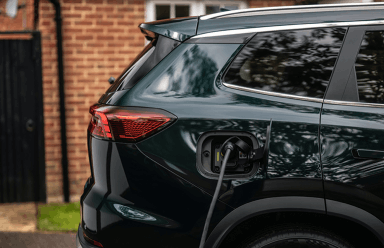
- Plug-in hybrids (PHEVs) have larger batteries and can travel much further on electric power alone. They need to be plugged in to charge but can offer lower running costs and emissions when regularly charged.
- The best hybrid depends on your driving needs: MHEVs suit drivers wanting a small efficiency boost, HEVs are ideal for those who want hybrid benefits without charging, and PHEVs are best suited to drivers who can charge at home and regularly make shorter journeys.
What is a Hybrid Car?
The term ‘hybrid’ can be used to refer to any car that pairs an electric motor with a petrol or diesel engine. This can include plug-in hybrids (PHEV), full hybrids (HEV) or mild hybrids (MHEV), as these all combine electric motors with internal combustion engines (ICE). But what makes them all different?
Slight variations in technology have led to the introduction of different names for the range of hybrid powertrains. Understanding what makes these hybrid systems different can help you to be in the best position to choose the right hybrid for your needs. In this article, we will explore each type of hybrid in detail to help you learn more about the pros and cons of each and decide whether a hybrid is the right option for you.
What is a Mild Hybrid?
Also known as MHEVs, mild hybrids are made up of three key components: a small electric motor, a combustion engine (either petrol or diesel), and a battery. These models cannot be charged and often use a 48-volt electrical system to power parts of the car that would have been traditionally powered by a combustion engine. This system makes your car’s engine more efficient, capable of reducing fuel consumption and CO2 emissions.
Unlike a full hybrid, the electric motor in a mild hybrid cannot power the car on its own. Instead, the motor steps in alongside the engine as a means to assist driving at various points, such as during acceleration, or to operate the start/stop system when stationary at traffic lights. Mild hybrids are also capable of harvesting energy from regenerative braking, enabling it to be stored in the battery to be reused when needed.
Pros
- Improved fuel efficiency
- Reduced CO2 emissions
Cons
- Unable to drive on electric power alone
- Not as cost-effective as a full hybrid
Mild Hybrid Models


What is a Full Hybrid?
Known as a HEV, a full hybrid is more common than MHEVs. A full hybrid combines a petrol or diesel combustion engine with an electric motor, able to use the engine to the electric motor in isolation as well as in combination. Whichever is chosen is often automatically selected based on the current driving conditions.
The full hybrid automatically moves between combustion only, electric only or a combination of the two. A small electric battery supports improved fuel economy and improved energy efficiency, also reducing emissions when driving at lower speeds. The electric motor alone can be used for shorter distances, helping to offer a no emission driving option for those whose commutes are just a few miles. A full hybrid does not require being plugged in to recharge. The engine charges the battery during driving and combines this with energy recovered from regenerative braking. This is a similar function to that available in mild hybrids.
Pros
- Can drive on electric power alone for short distances
- No charging required
Cons
- Typically more expensive than a standard petrol or diesel car
- Insurance and repairs are typically more expensive than a standard petrol or diesel option
Full Hybrid Models


What is a Plug-In Hybrid?
A plug-in hybrid or PHEV is a hybrid option that operates using a combination of a petrol or diesel engine with a large electric motor. Plugging into a charging point enables the battery to charge, differing from full or mild hybrids that charge their battery during driving. Plug-in hybrid models often hold larger batteries than other hybrid options, enabling them to offer longer electric-only ranges. A full hybrid may be able to offer 1 or 2 miles of electric-only range, whereas a plug-in hybrid could offer anywhere from 20 to 50 miles of all-electric driving.
Operated in the same way as an electric car, plug-in hybrid models require charging with a household three-pin plug, wall charger, or public charging point. For those who don’t want to rely on electric driving infrastructures, this may seem more inconvenient than other hybrid models that don’t require charging. However, this powertrain can offer many rewards in terms of lower running costs and improved efficiency. The combustion engine does still require refuelling, as with standard petrol- or diesel-powered vehicles.
Pros
- Can drive on electric-only energy for short commutes
- Lowered emissions
Cons
- Requires charging
- Typically, the most expensive hybrid powertrain
Plug-In Hybrid Models


Which Hybrid Should I Choose?
Deciding which hybrid option is the best for you can be a challenge. Whichever you go for, whether you choose mild hybrid, full hybrid or plug-in hybrid, you are choosing an option that will offer you improved driving range, efficiency and lower emissions. Below we have broken down some of the key differences across the three options to help you choose which is best for you.
Mild Hybrid: If you still prefer the familiarity of petrol or diesel options but want to take steps towards more eco-friendly driving, a mild hybrid might be the best option for you. The smaller electric motor offers support when driving, improving fuel efficiency whilst going largely undetected.
A mild hybrid is the best choice for those looking for a more efficient option than the traditional engine but won’t offer you a significantly lower carbon footprint.
Full Hybrid: This option is perfect for those who want to switch to a hybrid without requiring an at-home charging point. The benefit of improved fuel efficiency and lower emissions makes this option perfect for those looking to reduce their carbon footprint that bit more than is possible from a mild hybrid alone. However, the small battery only offers a short distance of electric-only driving, meaning it doesn’t quite match up to the electrified capabilities of a plug-in option.
A full hybrid is the best option for those who want a more cost-effective and eco-friendly drive, without the inconvenience of plug-in charging. If you already have a home charging set-up, the benefits of a plug-in model do outweigh full hybrids, so it may be best to consider a plug-in option.
Plug-In Hybrid: Often more expensive than mild or full hybrid models, plug-in hybrids are the most efficient and can deliver the lowest emissions out of the three options discussed in this article. Plug-in hybrid batteries and motors offer an electric-only range that can accommodate most short commutes, and even when the battery is out of charge, the engine kicks in seamlessly to continue your journey on traditional fuel.
A plug-in hybrid is the perfect choice for those looking for lowered emissions without having to deal with electric range anxiety. If you already have the capability to charge at home, this option offers the most benefits, but if you don’t have a home charging solution, this may not be the most cost-effective choice.
Is a Hybrid Car Worth It?
Hybrid cars are worth it, especially for those who aren’t ready to move to fully-electric driving. Whichever you choose, you are making moves towards lower emissions, improved fuel economy and a greener footprint. Choosing a hybrid offers many benefits to drivers, and thanks to their increased availability it’s easier than ever to find one that suits you. However, switching to a hybrid is a choice that depends on your personal life and driving style, so it is important to consider what is important to you.
It is worth considering that plug-in hybrid models tend to be larger models or SUVs, so those looking for a small runaround may be better suited to a mild or full hybrid.
How Reliable Are Hybrid Cars?
As with any powertrain option, if you keep up with regular servicing and maintenance, full hybrids can be as if not more reliable than traditional engines. Hybrids generally help to protect your brakes as hybrid electric motors are used for breaking, also known as regenerative breaking. During regenerative breaking, the electric motor converts momentum into electrical energy. Features that require the electric motor to provide support including during acceleration and the automatic stop/start system for waiting at traffic lights also helps to prolong the lifespan of your car.
Frequently Asked Questions
Are grants available for hybrid cars?
Originally hybrid cars were available with financial grants, but the grant focus has now been moved to zero emission models only.
Do hybrid cars need charging?
Hybrid cars all need charging, but the way they are charged depends on the model type. Full and mild hybrids are recharged by the engine and regenerative breaking. Plug-in hybrids are charged using home or public charging points, on the other hand.
What is the most common problem with hybrid cars?
Issues aren’t very common, but it is worth bearing in mind problems that can arise in relation to the battery components. As with other electronic devices, hybrid batteries experience degradation that reduce the performance of your hybrid car. Ensuring you keep up with maintenance and servicing can help to prevent any common or unexpected issues.
Are all hybrid cars automatic?
Most hybrid cars have automatic gear transmissions, but some may have manual options.
If you’re in the market for a hybrid vehicle, whether new or used, here at Greenhous we can help you find the right option for your needs. From mild and full hybrids to plug-in hybrid models, our new and used vehicle ranges offer a variety of vehicles to suit different driving styles, budgets and charging requirements. Explore our range of hybrid cars today or speak to our one of our friendly sales teams for help choosing the right hybrid powertrain for you.
About the author
Emily Hunt